Central Texas Hard Water and How It Shortens a Water Heater's Life
Nobody's water heater fails because of one bad day. It fails because of five quiet years nobody flushed it.
September 2, 2026 · 3 min read
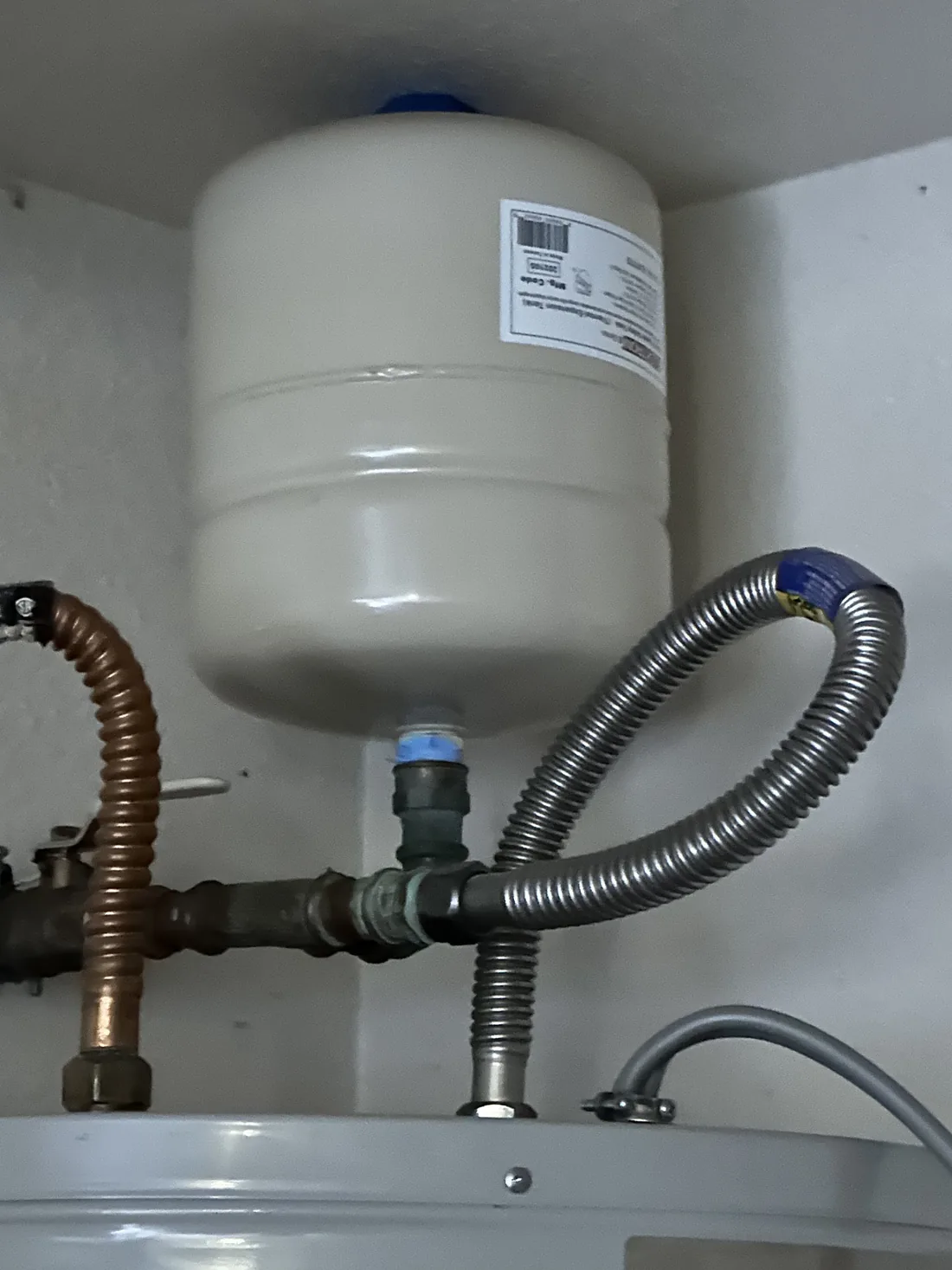
Central Texas groundwater carries more dissolved calcium and magnesium than water in a lot of the country, and most people only notice it as spots on a glass shower door or soap that won't quite lather. Inside a water heater, the same minerals are doing something slower and more expensive.
It doesn't take a laboratory test to see the evidence. Look at a showerhead that's a few years old and hasn't been descaled, or a kettle element with a chalky white crust on it, and you're looking at the same minerals a water heater is dealing with every single day, just concentrated where you can actually see them. A water heater hides that same buildup inside a sealed steel tank, which is exactly why it goes unnoticed for years instead of weeks.
Where the minerals actually go
Heat doesn't make dissolved minerals disappear. It makes them come out of solution. As water heats, calcium and magnesium precipitate out and settle to the bottom of the tank as sediment, and in a gas unit that sediment lands directly between the flame and the water it's supposed to be heating.
What that layer of sediment actually does
A sediment layer acts as insulation in exactly the wrong place. It sits between the heat source and the water, so the burner has to run longer and hotter to get the same result, and water trapped underneath the sediment layer can end up boiling while the water above it is still lukewarm. That trapped steam pushing up through hardened sediment is what makes a water heater rumble, pop, or sound like popcorn going off in the garage. It's not the tank complaining for no reason. It's the tank telling you exactly what's built up inside it.
The anode rod nobody thinks about
Every standard tank water heater has a sacrificial anode rod, usually magnesium or aluminum, whose entire job is to corrode before the steel tank does. Hard water speeds up that electrochemical process, which means the rod does its job faster and wears out sooner than it would in soft water. Once the rod is used up, the tank itself becomes the next thing corroding, quietly, on the inside, where nobody's looking. Almost nobody checks an anode rod on their own. It's not visible, it's not glamorous, and it's one of the cheapest parts on the whole unit to replace before it matters.
What actually helps
- Flush the tank annually, before sediment has years to pack down into a hardened layer that's harder to clear.
- Have the anode rod checked rather than assumed. A rod that's still doing its job is cheap insurance. A tank that's started corroding on its own isn't.
- If you're replacing a unit anyway, ask about one built with tougher-water conditions in mind. We're a proud seller of A.O. Smith and repair every major brand, so we'll tell you honestly what fits your situation rather than what's easiest to sell.
- Don't file a rumbling tank away as background noise. It's a maintenance to-do list, not a countdown you can ignore indefinitely.
There's a rough shape to how this plays out over a tank's life, even without an exact number attached to it. The first year or two, nothing. No sound, no symptom, nothing to flush because there's nothing built up yet. Somewhere in the middle years, the popping starts, quiet at first, easy to ignore, and that's the window where a flush actually buys the tank real time. Left alone past that point, the sediment layer hardens, the popping gets louder and more constant, recovery time gets slower, and the tank is now working at a real disadvantage every single day until either the burner gives out from the extra strain or the corroded tank itself starts to leak. None of those stages happen on a fixed schedule. All of them happen faster with hard water sitting untreated than they would with the water flushed on a normal schedule.
None of this means a rumbling water heater is about to fail tomorrow. It usually means exactly what it sounds like: sediment has built up, and the tank is working harder than it should to do the same job. That's still fixable in most cases, and cheaper to fix now than after the tank actually gives out. Cove Plumbing has been servicing water heaters across Central Texas since 1982, we sell A.O. Smith and repair all major brands, and free estimates are free regardless of which brand is sitting in your closet.
Cove Plumbing Inc — (254) 275-4275
Call (254) 275-4275More articles
Why a Backflow Assembly Bursts in a Texas Freeze, and What Actually Stops It
It only takes one bad night, not a whole winter, to crack a device that runs fine the other 364 days of the year.
What a Sewer Camera Actually Shows You, and When Jetting Beats a Roto Machine
The clog is never the whole story. The camera is how you find out what actually happened to the pipe.